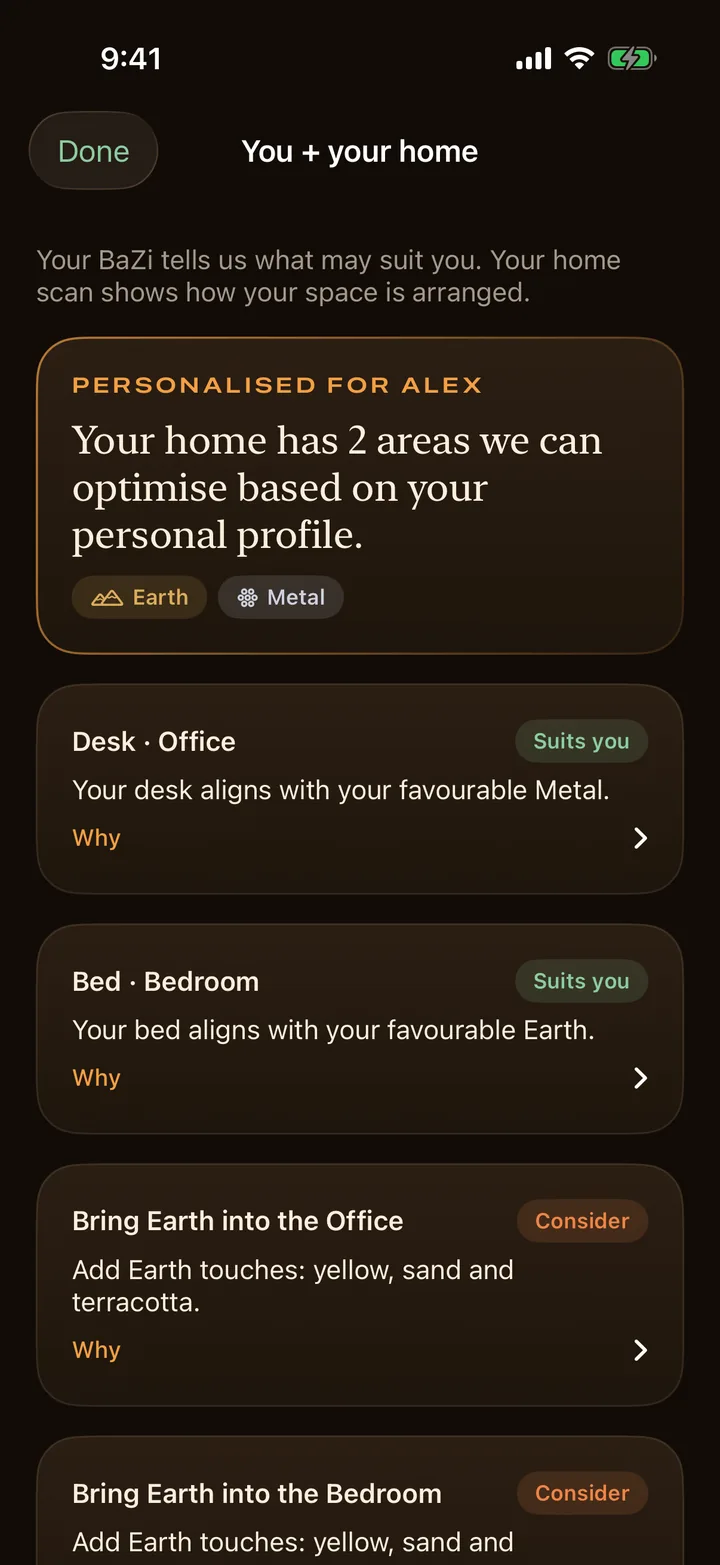

A desk facing the wall
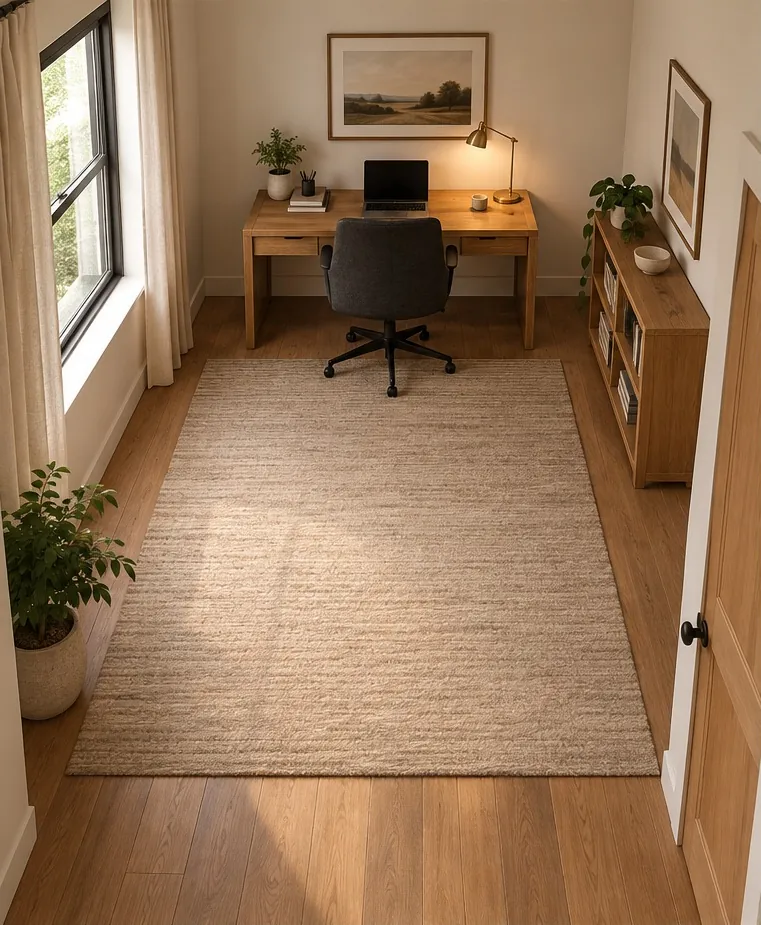 Before
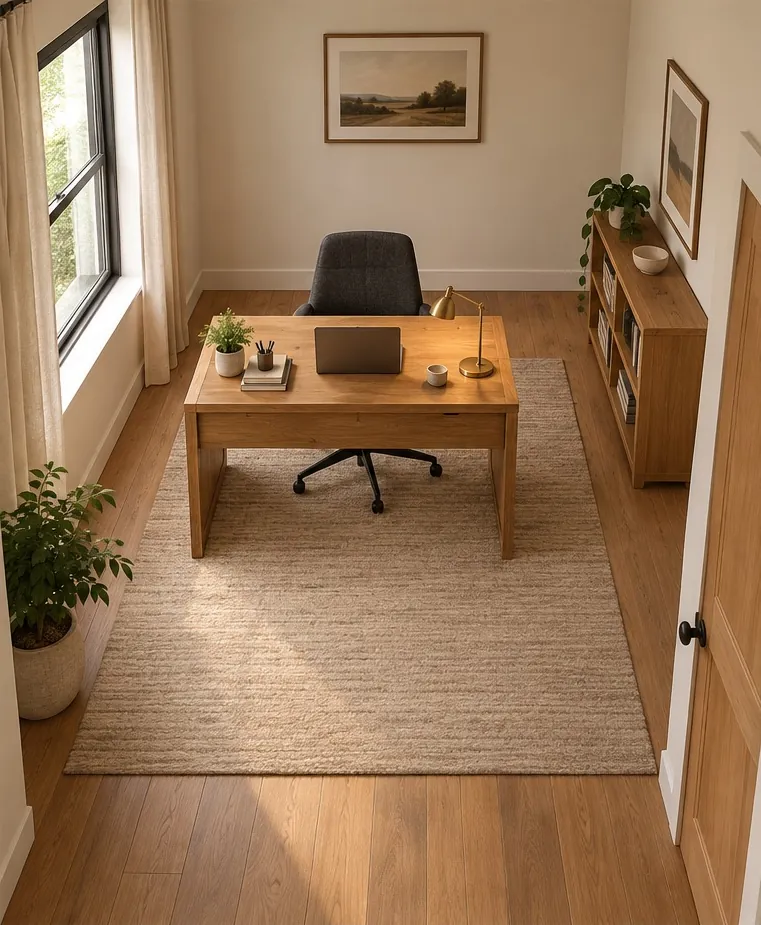 After
Rule: Command position
Before. The desk is pushed against the far wall, so whoever sits there has the door behind them.
After. The desk is turned to face the room. The chair has the wall behind it and the door is in view.
Feng Shui for the Whole Home Office → Desk Placement Checker →
The desk, briefly
Form-school Feng Shui asks three things of a desk: can you see the door from your chair, is there a solid wall behind you, and are you out of the door’s direct line. Which of the "facing a wall" arrangements matter, and the remedies for each, are set out on desk facing a wall. To try positions before moving anything, use the desk placement checker. The rest of this page is about everything else in the room.
Light and the window
The tradition reads a well-lit work area as lively and a dim corner as stagnant. The practical reading is the same: you work better where you can see.
Where the window sits relative to the desk decides most of it.
- Window to the side. The arrangement most teachers and ordinary ergonomic advice agree on. Daylight crosses the desk without falling on the screen or into your eyes.
- Window behind you. Traditionally weak support, and practically a problem twice: glare on the screen, and on a video call you appear as a silhouette. A blind kept half closed while you work answers both.
- Window in front. Teachers differ. Some like the view; others say attention goes out with it. Your eyes also have to adjust between a bright window and a screen.
Evening work needs a lamp on the desk as well as the ceiling light, placed on the side opposite your writing hand so your hand does not shade the page.
Storage, shelves and clutter
Form school prefers storage that closes. Open shelving facing your seat is read as many small edges and much to look at; cupboards with doors are read as settled. Some practitioners say this strongly, others not at all.
Two rules are more widely shared. Nothing heavy over your head: a shelf fixed directly above the chair is disliked for the same reason as a beam over a bed. Hang it beside the desk instead. No corner aimed at your seat: the edge of a bookcase or filing cabinet pointing at you is a "poison arrow". Turn it or slide it until the corner points past.
Then the floor. A spare room that is also an office often holds a guest bed, an exercise bike and boxes. When furniture covers most of the floor the room reads as crowded, and the usual advice is to take one thing out before rearranging the rest. The walk from the door to the chair should not involve stepping over a printer or a cable.
What is behind you on a video call
The camera sees exactly what Feng Shui calls your backing, so the two sets of advice line up.
- A wall behind you is the strongest position and the plainest background. A picture or a closed cabinet is enough.
- A door behind you puts everyone who comes in on the call, and is the position the tradition likes least for a desk.
- A window behind you turns you into a silhouette unless you light your face from the front.
- A bed behind you tells colleagues the office is also the bedroom. Turning the desk so the bed is beside or behind the camera keeps it out of the frame.
- Open shelves show every spine and box. If the call matters, a cupboard door shut is the quickest tidy.
Sharing a room: bedroom, living room, two people
Most people have no separate study. Feng Shui’s concern is that work and rest stay apart.
In a bedroom the bed keeps first claim on the command position. The desk takes the best of what is left, ideally with its back to a wall, out of sight from the pillow, and with no corner pointing at the bed. A folding screen, a curtain, or a cloth over the monitor at night is the usual way to close the office.
In a living room keep the desk off the routes people walk and give the chair a wall, even at the cost of the view. A desk that folds or closes is often recommended, so work is put away when it is finished.
Two people in one office: desks face to face leave one person with the door behind them. Two desks at a right angle in the far corner, or side by side against the far wall facing the door, let both see the doorway.
Corner desks and small flats
An L-shaped corner desk is usually set up facing into the corner. That leaves the whole room, and usually the door, behind you. Turned so the chair backs onto the wall and the short arm runs down the side wall, the same desk sees the door and keeps its L.
In a studio or one-bedroom flat the bed again comes first, then the sofa, then the desk. A desk at the end of a sofa, a wall-mounted fold-down desk, or a console behind the sofa used as a desk are common answers. Whatever the shape, the three questions are the same, and one of them is usually worth giving up for the other two. Most practitioners give up the wall behind before the view of the door.
Which room, and which direction
Which room the office is in matters to the form school too: a workroom at the end of a long corridor, or one the home’s flow does not reach, is covered under home layout. Compass direction belongs to other methods. Eight Mansions gives each person four good facing directions, and BaZi-based approaches start from the directions of your favourable elements. They do not always agree, and where a direction would put your back to the door most practitioners keep the view of the door.
Offices that don't cooperate
- A spare room that is also the guest room — Put the bed against the wall that leaves the far corner free, and float the desk there with your back to the wall. A day bed or sofa bed takes less floor than a double and lets the room stop reading as crowded.
- A desk under the only window — Turn it ninety degrees so the window is beside you. You keep the daylight, lose the glare and the silhouette, and usually gain a view of the door.
- A corner of the bedroom — Choose the wall the bed does not face, check that no corner of the desk points at the pillow, and close it off at night with a screen or a cloth over the monitor.
- A living-room desk in a one-bedroom flat — Put it against the wall behind the sofa, facing into the room, so the chair has a wall and the walkway passes in front of the desk, not behind the chair.
Common mistakes
- Fixing the desk and ignoring the window — a desk in the command position with the window behind it still gives you glare and a silhouette. A blind is part of the layout.
- Shelves over the chair — they go up because the wall above the desk is free. Hang them beside the desk instead.
- Letting the office become the storeroom — boxes and spare furniture arrive one at a time until the path to the chair is a squeeze.
- Leaving the bedroom office open at night — a screen or a cover costs little and is the remedy almost every practitioner agrees on.
What a scan reads in your home office
- Whether the desk is in the command position: can you see the door from it, is there a solid wall behind you, and are you directly in line with the door.
- Furniture corners pointing at the desk.
- Furniture that narrows or cuts the path the flow takes through the room, and how much of the floor is covered.
- Whether the room is reached by the flow path from the front door at all.
- Suggested moves ranked by how much they help, which you can preview in AR before lifting anything.
- With your BaZi chart and a compass heading: the direction you face at the desk and the sector it sits in, compared with your favourable elements.
- Not read: light, glare and blinds, shelves above your head, what is on the desk or in the shelves, cables, and what the camera sees on a call. Those you check by eye.
Questions
What is the most important thing in a Feng Shui home office?
The desk in the command position, with the door in view and a wall behind the chair. Most schools agree on that before anything else. After it come light, storage that closes, and a clear walk from the door to the chair.
Should the window be in front of my desk or beside it?
Beside it is the arrangement most advice agrees on, Feng Shui or not. In front is a matter of taste among teachers. Directly behind is read as weak support and gives glare and a silhouette on video calls.
Is open shelving bad Feng Shui in an office?
Some practitioners prefer cupboards with doors and read open shelves facing the seat as clutter. The more widely shared rules are narrower: no shelf directly above your head, and no shelf corner aimed at where you sit.
Can I have my office in my bedroom?
Yes, and many people must. Give the bed the best position, keep the desk out of sight from the pillow or screen it at night, and check that no desk corner points at the bed.
How should I place a corner desk?
Not facing into the corner, which puts the room and usually the door behind you. Turn it so your chair backs onto a wall and the short arm runs along the side wall, then check the door is in view.
Sources and further reading
- Guo Pu (attributed), 葬書 Zangshu (The Book of Burial), Jin dynasty, 4th century
- Ole Bruun, An Introduction to Feng Shui, Cambridge University Press, 2008
- Michael Paton, Five Classics of Fengshui: Chinese Spiritual Geography in Historical and Environmental Perspective, Brill, 2013
Works on the tradition this page summarises. They are further reading, not endorsements of the app. How the app applies the rules: how Feng Shui AR reads a home.
Reading about a Feng Shui home office is one thing. Seeing your own room is another. How much of the floor the furniture really covers, or whether that bookcase corner points at your chair, is hard to judge from the seat itself.
SCAN YOUR OFFICE
Map the room with your phone and see whether your desk sees the door, what crowds the floor, and which way you face.
On the App Store and Google Play · iPhone, iPad and Android